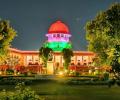
The Supreme Court has agreed to list for final hearing the pleas challenging the validity of certain provisions of the Places of Worship (Special Provisions) Act, 1991.
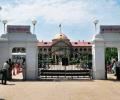
The Allahabad High Court has ruled that the Places of Worship (Special Provisions) Act, 1991, prohibits only the conversion of religious character but does not prevent the state from acquiring such properties for secular and public purposes. This observation came while dismissing a petition challenging the widening and beautification of the Dalmandi area in Varanasi for the Shri Kashi Vishwanath Dham corridor, which involved the proposed demolition of six ancient mosques.

The Places of Worship (Special Provisions) Act, 1991 provides for maintaining the 'religious character' of holy structures as it existed on August 15, 1947.
The Mathura Shahi Masjid Eidgah Committee has approached the Supreme Court, requesting the court to prevent the central government from filing a response to a petition challenging the Places of Worship Act's constitutional validity. The committee accuses the BJP-led government of intentionally delaying its response. The court had previously issued a notice to the government in March 2021, but the government has yet to submit its reply despite numerous opportunities. The committee argues that the government's delay is intended to obstruct those opposing the challenge to the Places of Worship Act from filing their own responses. The petition also states that the pleas challenging the law's validity are scheduled for hearing on February 17, and closing the government's right to respond would serve justice. The Supreme Court previously issued a ruling in December 2022 that stopped courts from entertaining new lawsuits or issuing interim or final orders regarding the reclaiming of religious places, particularly mosques and dargahs. The ruling halted proceedings in 18 lawsuits filed by Hindu groups seeking surveys to confirm the original religious character of 10 mosques, including the Gyanvapi Masjid in Varanasi, the Shahi Idgah Masjid in Mathura, and the Shahi Jama Masjid in Sambhal. This decision was made in response to six petitions, including one filed by lawyer Ashwini Upadhyay, challenging various provisions of the Places of Worship Act. The 1991 law prohibits the conversion of places of worship and guarantees the preservation of their existing religious character as it stood on August 15, 1947. Notably, the dispute regarding the Ram Janmabhoomi-Babri Masjid in Ayodhya was excluded from this law. There are also several cross-petitions advocating for a strict enforcement of the 1991 law to uphold communal harmony and maintain the current status of mosques that Hindu groups seek to reclaim, claiming they were temples before being destroyed by invaders.
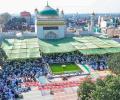
The law prohibits conversion of any place of worship and provides for the maintenance of the religious character of any place of worship as it existed on August 15, 1947.
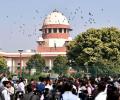
A bench comprising Chief Justice Sanjiv Khanna and Justice Sanjay Kumar also indicated that it may not take up the pending scheduled petitions, heard earlier by a three-judge bench, during the day as it was sitting in a combination of two judges.

The plea, filed by a religious guru based in Mathura, Devkinandan Thakur, has challenged the constitutional validity of Sections 2, 3, and 4 of the Places of Worship (Special Provisions) Act 1991, stating that it offends Articles 14, 15, 21, 25, 26, 29 of the Indian constitution and violates the principles of secularism and the rule of law, which is an integral part of the Preamble and basic structure of the Constitution.
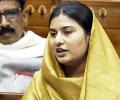
Samajwadi Party leader and Kairana MP Iqra Choudhary has moved the Supreme Court seeking effective implementation of the Places of Worship (Special Provisions) Act, 1991. This move comes amidst several petitions challenging the law's validity, including those filed by the Akhil Bhartiya Sant Samiti and lawyer Ashwini Upadhyay. The Supreme Court, in December 2022, had restrained all courts from examining fresh suits and passing interim orders in pending cases seeking to reclaim religious places. The Act aims to maintain the religious character of places of worship as they existed on August 15, 1947, but the dispute relating to Ram Janmabhoomi-Babri Masjid at Ayodhya was kept out of its purview. The court has listed Choudhary's plea with other pending pleas for February 17.
The Act prohibits conversion of any place of worship and provides for the maintenance of the religious character of any place of worship as it existed on August 15, 1947.
A plea was filed in the Supreme Court on Wednesday challenging the constitutional validity of certain sections of the Places of Worship (Special Provisions) Act 1991, saying that it "barefacedly violates" the principles of secularism and rule of law.

The Press Club of India clarified it did not organise an event where Prime Minister Narendra Modi's cutout was worshipped and a 'Modi Chalisa' was read. The event, organised by the Bihar State Transgender Welfare Board, was stopped by club authorities due to violation of rental terms. The organiser plans to build a temple for PM Modi in Bihar, citing his support for the transgender community.
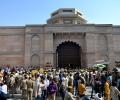
The Supreme Court of India is scheduled to hear a batch of petitions challenging the validity of certain provisions of the Places of Worship (Special Provisions) Act, 1991, which prohibits lawsuits to reclaim a place of worship or change its character from what prevailed on August 15, 1947. The pleas, including one filed by Ashwini Upadhyay, argue that these provisions violate the right to judicial remedy and create an arbitrary cut-off date. The matter will be heard in the backdrop of several ongoing cases related to places of worship, including the Gyanvapi Mosque in Varanasi and the Shahi Idgah Mosque in Mathura. The Muslim side has cited the 1991 law to argue that such suits are not maintainable. The Supreme Court had previously sought the Centre's response to Upadhyay's petition, which alleged that the law creates an "arbitrary and irrational retrospective cut-off date" for maintaining the character of places of worship.
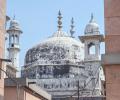
The Places of Worship Act is 'An Act to prohibit conversion of any place of worship and to provide for the maintenance of the religious character of any place of worship as it existed on the 15th day of August 1947, and for matters connected therewith or incidental thereto'.

The Supreme Court on Tuesday granted time till October 31 to the Centre to file its response to a batch of pleas challenging certain provisions of a 1991 law that prohibits filing of a lawsuit to reclaim a place of worship or seek a change in its character from what prevailed on August 15, 1947.
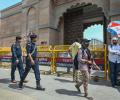
District Judge A K Vishvesh ordered that it would continue to hear the petition seeking the right to worship in the temple.
The AIMPLB contended that the object of the Act is to prevent disturbances of public order, maintain peace and tranquility, and strengthen the basic feature of secularism.

India's Ambassador to the US, Vinay Mohan Kwatra, has clarified that the recent amendments to the Foreign Contribution (Regulation) Act (FCRA) are primarily aimed at enhancing transparency and ensuring accountability in foreign financial flows.
A bench of Justices DY Chandrachud and JB Pardiwala said the petitioners will be able to supplement the grounds of challenge in the pending petitions.

'It was a disaster on his part to give an oral remark which allowed ascertainment of the religious character of places of worship.' 'This disrupted the social harmony of the country.'

A court in Srinagar has sentenced an ex-militant to life imprisonment for the 2020 murder of a former terror outfit chief inside a mosque, observing that violence in a place of worship cannot be tolerated.
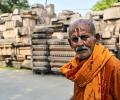
The Supreme Court will hear on April 5 a batch of PILs challenging the validity of certain provisions of a 1991 law that prohibits filing of a lawsuit to reclaim a place of worship or seek a change in its character from what prevailed on August 15, 1947.

Two men, including a priest, were injured after a 27-year-old man stabbed them with a screwdriver inside a gurdwara in Edmonton, Canada. The suspect, who has a history of violent attacks and was recently released from prison, has been arrested, and police are investigating whether the incident was hate-motivated.

A US Congressman has raised serious concerns regarding India's proposed amendments to the Foreign Contribution Regulation Act (FCRA), warning that these changes could lead to government takeovers of religious charities and strain bilateral relations.
The 1991 provision is an Act to prohibit conversion of any place of worship and to provide for the maintenance of the religious character of any place of worship as it existed on August 15, 1947, and for matters connected therewith or incidental thereto.

The Act prohibits conversion of any place of worship and to provide for the maintenance of the religious character of any place of worship as it existed on August 15, 1947.

Eiffel Tower employees launched a strike, leading to the iconic landmark's closure, after allegations surfaced that female staff were asked to vacate their posts during a visit by the Hindu religious organisation BAPS.
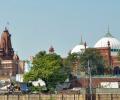
Mathura has a prominent mosque -- the Shahi Idgah -- located next to a temple, believed to be the site of the birthplace of Lord Krishna. The mosque has been at the centre of a legal battle for years with Hindu groups claiming that the Idgah was built on land where Lord Krishna was born.

Delhi Police have launched an investigation after 'objectionable material' was found at the gate of a temple in the Dayalpur area of northeast Delhi. An FIR has been registered, and police are reviewing CCTV footage and deploying forces to maintain calm.

On Uttam Kumar's birth centenary, actor Prosenjit Chatterjee shares intimate memories of the Bengali matinee idol, recounting how 'Uttam-jethu' not only launched his career but also profoundly influenced his father, Biswajit Chatterjee, and remained a guiding force for their family.

The Meghalaya High Court has ruled that moral objections from church elders and locals cannot be a valid ground to deny the operation of a legally licensed liquor outlet. The court directed authorities to permit a shop owner to operate her IMFL retail outlet, noting she fulfilled all statutory requirements and that the objections were based on moral rather than legal grounds. The ruling also highlighted that a legal outlet could help curb illegal liquor sales.
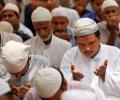
The All India Muslim Personal Law Board (AIMPLB) announced a nationwide movement against the 'deteriorating condition' and social and political marginalisation of Muslims in India, citing concerns over mob violence, demolition drives, and attempts to impose Vande Mataram.

The Supreme Court has directed that a separate open space be provided adjacent to the disputed Bhojshala site in Madhya Pradesh's Dhar for offering namaz on Fridays, pending the final resolution of the case. The court emphasised the sensitive nature of the matter and urged both Hindu and Muslim sides to exercise patience.

The Supreme Court has agreed to hear appeals challenging the Madhya Pradesh High Court's decision to designate the Bhojshala complex as a Goddess Saraswati temple, a ruling that also quashed Muslim prayer rights at the historic site.

The Kerala High Court has stated that laws and regulations should serve as a unifying force between religions and communities, not create discord. The observation came while dismissing a plea against the entry of Christian priests into a Hindu temple.
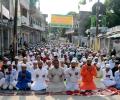
Amid a debate triggered by Uttar Pradesh Chief Minister Yogi Adityanath's recent remarks on offering namaz in public places, several Muslim clerics have said that Eid-ul-Azha prayers would be offered inside mosques and Eidgahs as in previous years, and, if required, arrangements could be made for multiple prayer shifts.

The Madhya Pradesh High Court has declared the disputed Bhojshala complex in Dhar to be a temple dedicated to Goddess Saraswati, suggesting the Muslim community seek land elsewhere for a mosque.

The Indian government has amended the Foreign Contribution Regulation Act (FCRA) rules, introducing stricter regulations for NGOs receiving foreign funds. Key changes include mandatory selection of predefined purposes and areas of operation, restrictions on foreign nationals as key functionaries, and explicit exclusion of proselytisation from certain faith-based activities. The amendments also introduce minimum spending limits, enhanced financial accountability, and increased transparency requirements, including social media disclosure and ultimate donor identification.

The Allahabad High Court has observed that throwing non-vegetarian food waste into the river Ganga could hurt the religious sentiments of the Hindu community, while granting bail to five persons accused of throwing leftovers into the river during an iftar party on a boat in Varanasi.

The Delhi High Court has granted interim bail to Baramulla MP Sheikh Abdul Rashid, who is accused in a terror-funding case, following the death of his father. The bail is effective until June 2, with strict conditions including police escort and restricted movement.

Dhamaal 4, the latest instalment in the comedy franchise, struggles with lazy writing, recycled jokes, and an over-reliance on self-referential humour, despite a committed cast.
